Have you or a loved one recently been injured in a truck accident? You may have several questions:
- What should I do first after a truck accident?
- Will insurance cover my medical expenses?
- What if I have to miss time at work?
- Who can be held responsible for my accident?
We can help answer your concerns. Contact our experienced truck accident attorneys today.

Call our experienced truck accident lawyers today to learn more about your legal rights.
Commercial trucks are an integral part of our economy. Every day, countless goods and products are transported through our nation’s highways via commercial trucks. While truck drivers may not necessarily be more dangerous drivers, accidents involving commercial trucks cause some of the most serious injuries and many fatalities.
The statistics tell the story. In 2014, there were 411,000 crashes involving large trucks. In 3,424 of these crashes there was at least one fatality. 20% of the total crashes resulted in at least one non-fatal injury.
Why Hire A Lawyer?
Accidents involving commercial trucks cause some of the most devastating injuries and lead to a disproportionate amount of fatalities. A seasoned truck accident attorney can help injured victims recover the financial compensation they need during an expensive recovery.
Victims and their families may be eligible for the following forms of compensation:
- Medical expenses
- Lost wages and loss of earning potential
- Loss of quality of life
- Pain and suffering
- Funeral and burial expenses
- Loss of consortium
No family should be forced to deal with the consequences of commercial truck driving negligence alone. The right attorney will use all of the available information in order to build a strong case against the parties responsible for your injuries, or the negligent death of a family member.
FREE CONSULTATION
Common Accident Causes By Commercial Drivers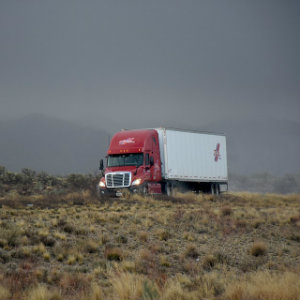
A large truck is defined as a truck with a gross vehicle weight over 10,000 pounds. Each truck accident is a complex combination of numerous factors.
When The Truck Driver Is At Fault
Truckers are professional drivers, but that doesn’t mean that they all drive perfectly. Most truck drivers are skilled and highly trained. However, some drivers and trucking companies cut corners. In many truck accidents, the commercial truck driver is at fault.
Fatigue
Truck drivers and their employers frequently push themselves to log extremely long hours. Some drivers are on the road for up to 70 hours per week. This 70-hour weekly maximum has actually been reduced from the original limit of 82 hours.
Drivers are permitted to be on the road for 11 hours each day and to work a total maximum of 14 hours per day. These shifts exceed the average American’s 8-hour workday by a wide margin. With such long hours, it’s easy for fatigue to set in.
Drowsy driving is extremely dangerous. In fact, studies have shown that driving while fatigued is at least as dangerous as driving drunk. After 18 hours without sleep, your driving skills are the same as if your BAC were .05. After 24 hours, you’re driving at the equivalent of .10 - which is .02 over the legal limit.
Inadequate Training
Driving a large truck is a big responsibility. It’s much more complicated than driving a passenger vehicle and requires special training.
Truckers must be properly trained in truck-driving techniques and safety protocol. Additionally, they must know how to drive defensively in order to anticipate road hazards and avoid collisions.
Supervisors who fail to properly train their drivers endanger all motorists.
Unfair Employer Expectations
Trucking companies often push their drivers for maximum productivity, often at the expense of the safety of fellow motorists. Some companies offer additional compensation if jobs are completed ahead of schedule.
Many truckers are encouraged to complete jobs as quickly as possible, and many speed excessively in the process. Additionally, truckers may drive fatigued or exceed maximum hours in the name of productivity.
Drug Use
A 2007 study by the Federal Motor Carrier Safety Administration found that prescription or illicit drug use contributed to 26% of commercial truck accidents. Drug use, like alcohol, often impairs a driver’s reaction time.
Mechanical Issues
Many truck accidents are caused by equipment issues. Examples include defective tires, brake failure due to improper maintenance, and improper trailer attachment.
When A Passenger Vehicle Is At-Fault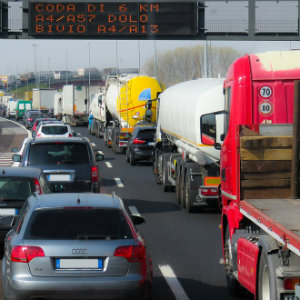
Drivers of cars and other passenger vehicles are often at fault for accidents involving commercial trucks. In these accidents, the passenger vehicle driver is often unaware of the proper safety precautions which should be followed in the vicinity of a large truck.
The previously mentioned 2007 study by the Federal Motor Carrier Safety Administration determined ten associated factors in accidents caused by passenger vehicle drivers:
- Interruption of traffic flow (i.e. abrupt changes in traffic density or speed)
- Unfamiliarity with roadway
- Inadequate surveillance (i.e. failure to properly check for traffic before a lane change)
- Driving too fast for conditions (i.e. inclement weather)
- Illegal maneuver (i.e. failure to signal before a lane change)
- Inattention
- Fatigue
- Illness
- False assumption of other driver’s actions
- Distraction by object or person inside vehicle
Passenger vehicle drivers must stay aware of the safe driving practices which should be followed near commercial trucks. Avoid the following common dangerous maneuvers when driving in the vicinity of a large truck:
- Driving in the truck’s blind spots
- Abrupt lane changes or failure to signal
- Merging into traffic too closely in front of a truck
- Driving between two large trucks
- Driving on the right side of a truck making a right turn
Of course, it’s always crucial to stay aware and safe on the road. But keep these extra precautions in mind when you’re sharing a road with a large commercial truck.
What To Do After A Truck Accident
Accidents involving commercial trucks have different circumstances than accidents between two or more passenger vehicles. The trucking company and their lawyers will be heavily involved and attempt to avoid liability. However, many of the same basic measures apply to all types of auto accidents:
- Do not admit fault and avoid speaking with other driver if possible
- Contact the police and obtain copies of the police report
- Seek medical attention and keep records
- Contact your insurance company ASAP
- Gather contact info from other driver(s) and witnesses
- Take photos of the scene, vehicle damage, and personal injuries
- Obtain insurance info from other driver
Post-accident measures specific to truck accidents include:
- Collect info for the driver’s employer
- Contact regulatory agencies - Federal and state laws require commercial trucks and trailers to be officially inspected at the scene for possible mechanical issues.
- Preserve black box data - Commercial trucks are outfitted with devices similar to the black boxes used on airplanes. These record data such as speed, brake use, and driving duration.
Documenting the accident as thoroughly as possible is the best way to protect yourself. Trucking companies have vast legal resources, and you need to be prepared with as much information as possible. If the truck driver was negligent in the accident, the right lawyer will be able to use this wealth of information to win a favorable verdict or settlement.
If you are contacted by the trucking company or an insurance adjuster, do not make a statement without consulting with your attorney. Your words could easily be twisted or misconstrued in order to avoid liability.
Who Might Be Liable?
Like all motor vehicle crashes, determining liability is all about establishing negligence. If a party had a legal duty to ensure your safety, failed to do so, and you became injured as a result, then that party may be deemed negligent.
Like all other accidents, the driver can obviously be found liable if their negligence caused the crash. In accidents involving commercial trucks, the following entities may also face a lawsuit, depending on circumstances.
Trucking Companies
If unsafe management practices contributed to your crash, then the driver’s employer could be found liable. For example, if the driver was fatigued because of unrealistic productivity demands (i.e. driving for too long) or improperly trained, then his or her employer could be at-fault.
Truck and Truck Parts Manufacturers
Some trucks may be poorly designed or contain general defects which violate safety regulations. If a defective truck or truck parts lead to a crash, a manufacturer could face legal action. For example, if the truck driver could not brake in time due to defective brakes or if the truck was poorly designed and impaired visibility for the driver.
Relevant Pages
- All about car accidents
- Truck accident lawyers in Jenkintown
- Information on Workers Comp
- Construction site accidents involving heavy machinery
- Philadelphia Office
Latest Truck Accident Updates
By Michael Monheit

March 27, 2017 - Tow Company Sues For $62K in Cleanup Costs in Crash That Killed 3
The owners of a towing and heavy hauling business are suing the owners of a trucking company whose driver was allegedly at fault in a Route 287 crash that left three people dead, according to a lawsuit.
C&L Towing Inc. of East Hanover claims its workers spent three days and more than $62,000 cleaning up and providing towing and craning services following a horrific wreck involving a cement-mixing truck, a tractor-trailer and a non-commercial vehicle, according to the suit filed Feb. 27 in Bergen County Superior Court.

Monheit Law Montgomery County Office 215-866-2018
Directions to our Montgomery County Injury Law Office
4V4Q+FM Jenkintown, Pennsylvania
Open 24 hours
Truck accident attorney Jenkintown
Civil law attorney
Employment attorney
Law firm
Attorney
Social security attorney
Monheit Law South Philly Office 215-302-0095
Directions to our South Philly Injury Law Office
WRCH+CP Philadelphia, Pennsylvania
Open 24 hours
Truck accident attorney South Philly
Civil law attorney
Employment attorney
Law firm
Attorney
Social security attorney